
Mastering Hockey Stickhandling: The Power of Slow Repetition and Muscle Memory in Skill Development
- Oct 29, 2025
- 3 min read

Hockey is more than just a fast-paced game. It’s an art that combines speed, agility, and skill. Among all the essential skills, stickhandling is crucial for every player aspiring to shine on the ice. But mastering this skill goes beyond showing off fancy moves; it involves understanding how muscle memory works and why slow, deliberate practice is vital. In this post, we’ll dive into how repetition and focused training can take your stickhandling skills to an entirely new level.
The Science of Stickhandling
Stickhandling is about controlling the puck with your stick while maneuvering around opponents. This intricate skill needs hand-eye coordination, balance, and quick decision-making. The backbone of stickhandling is muscle memory, a process that makes movements automatic through repetition.
When you practice something over and over, your brain creates pathways that help your body perform that movement more easily in the future. For example, cross-overs can improve significantly after just 10 minutes of focused practice, enhancing not only your stickhandling but also your overall game.
Interestingly, studies show that mental rehearsal, or visualizing a technique, can boost performance just as physical practice does. If you picture yourself smoothly executing a series of stickhandling moves, the combination of this mental practice and physical training can greatly enhance your skills.
The Importance of Slow, Deliberate Practice
In an era of highlight reels featuring incredible moves, it might be tempting to rush through practice. However, slowing down is one of the best ways to improve your stickhandling.
When you practice at a slower pace, you gain a deeper understanding of each movement. This way, you can pinpoint what you need to work on. Practicing at high speeds might create bad habits, as you might gloss over the necessary fundamentals.
For example, think about a player working to perfect the toe drag. If they speed through the move without grasping the right technique, they risk developing poor habits, like lifting the puck too high or misusing their body. By practicing this move slowly, focusing on stick positioning and body coordination, they can build a solid foundation for better execution later on.
Effective Drills for Slow Repetition
Incorporating slow, deliberate practice is essential, and here are some focused drills that emphasize repetition without sacrificing technique:
1. Stationary Stickhandling
Objective: Enhance hand-eye coordination and puck control.
How to Do It:
Choose a quiet area free from distractions.
Place the puck in front of you.
Truly engage with the puck by moving it back and forth, side to side, and in circles.
Keep your head up and focus on maintaining a low center of gravity.
Start slow for precision, and gradually let yourself speed up as your ability improves.
2. Cone Weaving
Objective: Improve agility and puck control while navigating through obstacles.
How to Do It:
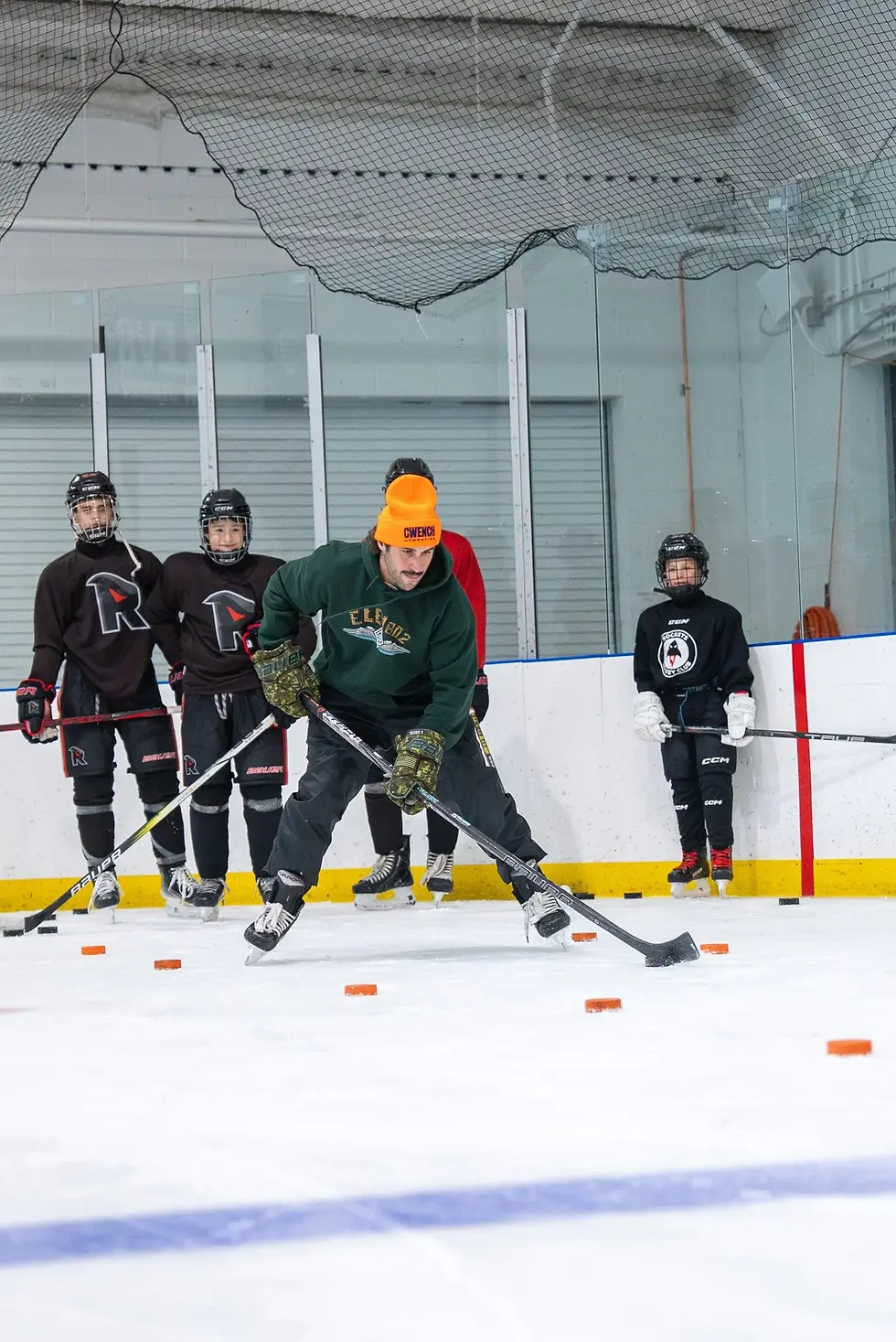
Set up a series of cones about two feet apart in a straight line.
Begin at one end and weave slowly through the cones while controlling the puck.
Use deliberate, small movements to navigate around each cone.
As you become more confident, slightly increase your speed, but ensure you prioritize control.
Integrating Slow Repetition into Your Training
To maximize your practice sessions, here are several actionable strategies:
Set Specific Goals: Before each session, decide on a goal, like improving your cross-overs or enhancing puck control.
Create a Structured Schedule: Aim for at least three practice sessions per week dedicated solely to stickhandling. Consistency will build muscle memory.
Use Visualization Techniques: Before practicing any new skill, spend a moment imagining yourself executing it perfectly. This mental practice reinforces neural pathways for the skill.
Monitor Your Progress: Record your training sessions using a smartphone or camera. Analyze your techniques and celebrate your improvements, no matter how small.
Stay Committed: Learning a skill takes time. Be patient and persistent, and remind yourself that gradual improvement is part of the journey.
Refining Your Stickhandling Skills
Mastering stickhandling isn’t just about practice; it’s about understanding the process. By focusing on slow, methodical training and building muscle memory, you set yourself up for success on the ice.
Employ the drills and methods we discussed, and remember that each step forward is significant. Stickhandling may take time to master, but with commitment and the right approach, you'll see steady improvements.
Embrace the power of slow repetition. Transform your stickhandling from a basic skill into an essential tool on the ice, giving you the advantage over your opponents. Happy practicing!


